Sewage & Category 3
Stay Out Of The Room. Turn The HVAC Off.
Those are the two things that matter before anybody arrives. Everything else on this page is what has to be removed and why, and the coverage question that catches most households out.
Free inspection on restoration work · Licensed C-10 & General B · Answered 24/7
Category is about contamination, not about how much water there is.
A teaspoon of Category 3 outranks a flooded room of Category 1. The category is what decides the protective equipment, the containment, and what is allowed to stay in the building.
Category 1
Clean water
A supply line, a water heater, a burst pipe upstream of any fixture. Sanitary at the source. Almost everything is salvageable if drying starts quickly.
Left sitting, Category 1 degrades. After roughly 48 hours in a warm building, or once it has passed through building materials, it is treated as Category 2.
Category 2
Grey water
Dishwasher and washing machine discharge, a toilet overflow with no solids, aquarium water. Contains contamination that can cause illness on contact or ingestion.
Carpet may be salvageable with pad removal and cleaning if reached early. Delay pushes it to Category 3.
Category 3
Black water
Sewage backup, toilet overflow past the trap, rising surface water from creeks or storm drains, and any water that sat long enough to grow its own biology.
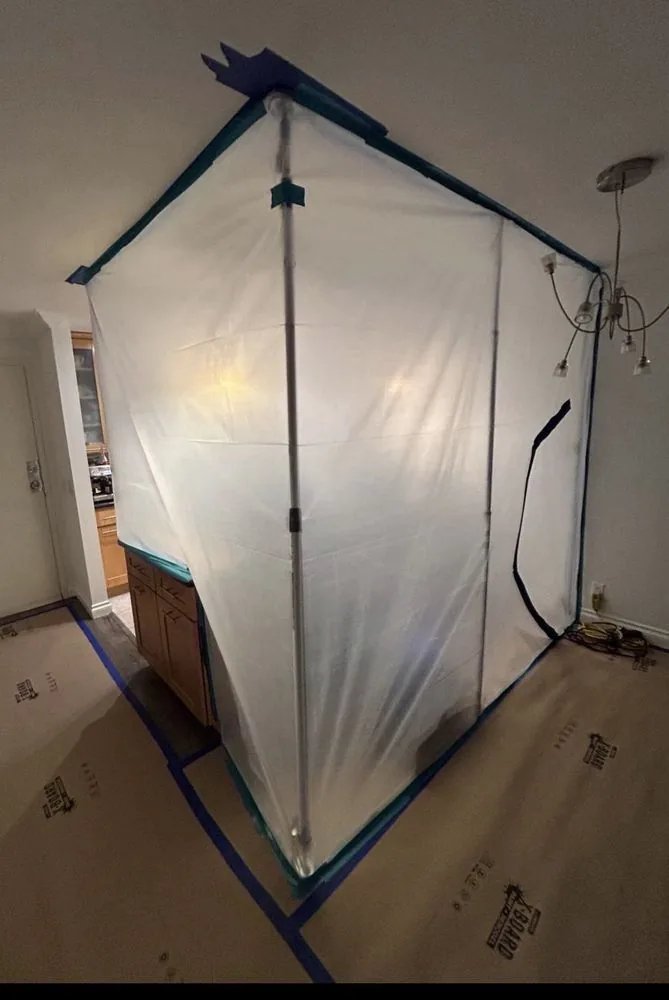
Grossly contaminated. Porous material that absorbed it is removed rather than cleaned, and the area is contained before anybody starts.
What comes out, and what can stay.
This is decided by whether a material can be verified clean afterwards, not by how bad it looks. It is also why the estimate on a Category 3 loss is higher than the water volume suggests.
Removed and disposed of
- Carpet and carpet pad in the affected area
- Upholstered furniture and mattresses that wicked
- Particleboard and MDF cabinet boxes and toe kicks
- Affected drywall, cut back above the wet line, and the insulation behind it
- Food, paper goods, cosmetics, and anything porous stored on the floor
- Laminate flooring and its underlayment
Cleaned and kept
- Tile, stone, sealed concrete, and grout, after cleaning
- Solid hardwood in many cases, depending on how long it stood
- Metal, glass, and hard plastics
- Framing and subfloor, cleaned and dried where structurally sound
- Clothing and linens that a commercial laundry can process
- Sealed and finished cabinetry boxes made of plywood, case by case
Everything discarded is photographed and itemized before it leaves, because a contents claim rests on that list. Do not clear anything out yourself first, however unpleasant it is to leave in place.

Check This Tonight
Sewer backup is usually not covered unless you added it.
A standard California homeowners policy commonly excludes water that backs up through sewers or drains. The coverage exists, it is sold as an endorsement, it costs very little, and most people have never been asked about it. Pull out your declarations page and look for wording about sewer or drain backup. If it is not there, that is a five minute call to your agent, and it is the cheapest thing on this entire website.
How we document a claimSewage backup questions
Next on the same job.
24/7 Emergency Response
A teaspoon of Category 3 outranks a flooded room of clean water.
Licensed C-10 & General B · CSLB #1158693 · Bonded & Insured