Mold Remediation
Three Quotes, Five Times Apart. Here Is How To Read Them.
Mold is the least regulated corner of this trade and the easiest place to be sold something cosmetic. Four questions separate real remediation from a spray and a promise, and they work on us too.
Free inspection on restoration work · Licensed C-10 & General B · Answered 24/7
Ask every bidder the same four questions.
Including us. The answers explain the price gap far better than the price does.
How much material comes out, and how does it leave the building?
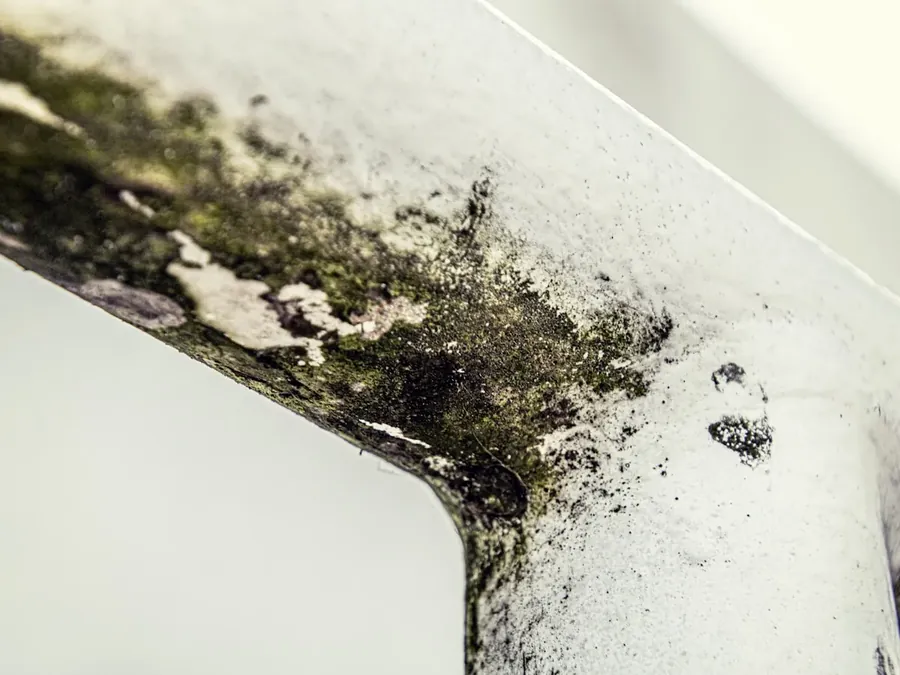
Porous material that grew mold does not get cleaned, it gets removed, cut back past the visible growth to sound material. It should leave the house bagged, through a route that does not cross clean space. A quote that removes nothing is treating a symptom.
Is the area contained and under negative pressure?
Sheeting and a zippered entry, with an air scrubber pulling the enclosure to slightly lower pressure than the rest of the house so air moves in and never out. Disturbing mold without this is how a bathroom problem becomes a whole-house problem.
What is being done about the water?
Mold is a symptom. If the pinhole leak, the failed pan, the missing exhaust fan, or the negative grade outside stays as it is, the mold comes back and the second remediation is on you. The source correction should be a line on the estimate, not an assumption.
Who says it is finished?
An independent hygienist, sampling after the work and before anything is rebuilt. Their clearance is the document that matters to a buyer, a landlord, an insurer, or a court. A contractor declaring its own work clean is worth what it costs.
Why this keeps happening in Bay Area houses.
Mold needs moisture, a food source, and time. Drywall paper and wood framing supply the food, and this housing stock supplies the moisture in ways that are specific to the region. Older homes with no bathroom exhaust or a fan that vents into the attic instead of outside. Crawl spaces under post-war construction with bare soil and no vapor barrier. Coastal humidity through Santa Cruz County and the west side of San Francisco, where interior surfaces stay cool enough to condense.
Then there are the slow leaks: the pinhole in copper behind a shower wall, the supply line to a fridge, the pan under a second-floor washer. None of them announce themselves, and all of them run for months.
Which is why finding the water is step one and not step four. A remediation performed without correcting the source is a job you will buy twice, and the second time the material behind it has usually gone further.
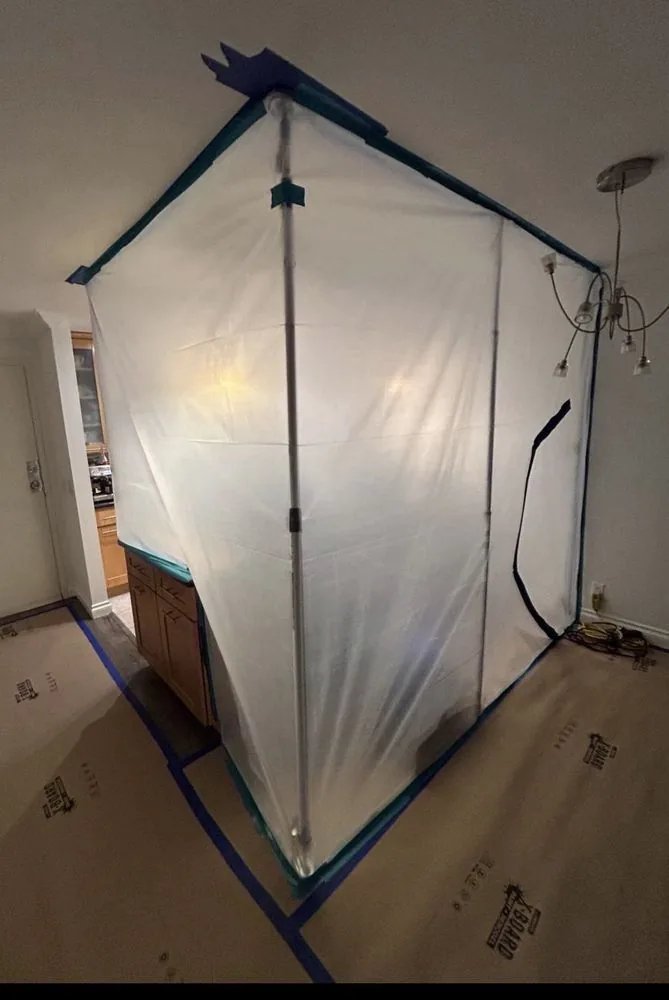
Containment and negative air established before anything is opened.
The order the work has to happen in.
Skipping or reordering any of these is where remediation jobs fail, and it is usually step one or step four that gets dropped.
- 01
Find the water first
Meters and a thermal camera to establish where moisture is and where it came from. Remediating before the source is understood guarantees a repeat.
- 02
Contain, then disturb
Sheeting, zippered entry, negative air with HEPA filtration established before the first piece of material is cut. Nothing gets opened up until the enclosure is holding.
- 03
Remove and clean
Affected porous material out and bagged. Non-porous surfaces HEPA-vacuumed and wiped. Framing and other structural material cleaned and treated where it is sound enough to stay.
- 04
Correct the source
The leak, the ventilation, the grading, the missing pan. Under our C-10 and General B licenses most of this is ours to fix rather than a referral.
- 05
Independent clearance
A third-party hygienist samples the space. We do not perform our own clearance and we do not recommend anybody who does.
- 06
Rebuild
Insulation, drywall, texture, paint, trim, and any electrical that came out, under the same contract once clearance has passed.

The Part Nobody Enjoys
Mold coverage is usually capped, and sometimes absent.
Many California homeowners policies limit mold remediation to a fixed sublimit, often a fraction of what the same policy would pay for the water loss that caused it, and some exclude it outright. Where mold follows a covered sudden water loss you are generally in better shape than where it followed months of seepage. Read your policy or ask your agent before you assume, and get the drying done fast, because the fastest way to keep a mold problem small is to never let it start.
How we document a claimMold questions
Next on the same job.
24/7 Emergency Response
Anything sold as a spray-only fix is selling you the appearance of one.
Licensed C-10 & General B · CSLB #1158693 · Bonded & Insured