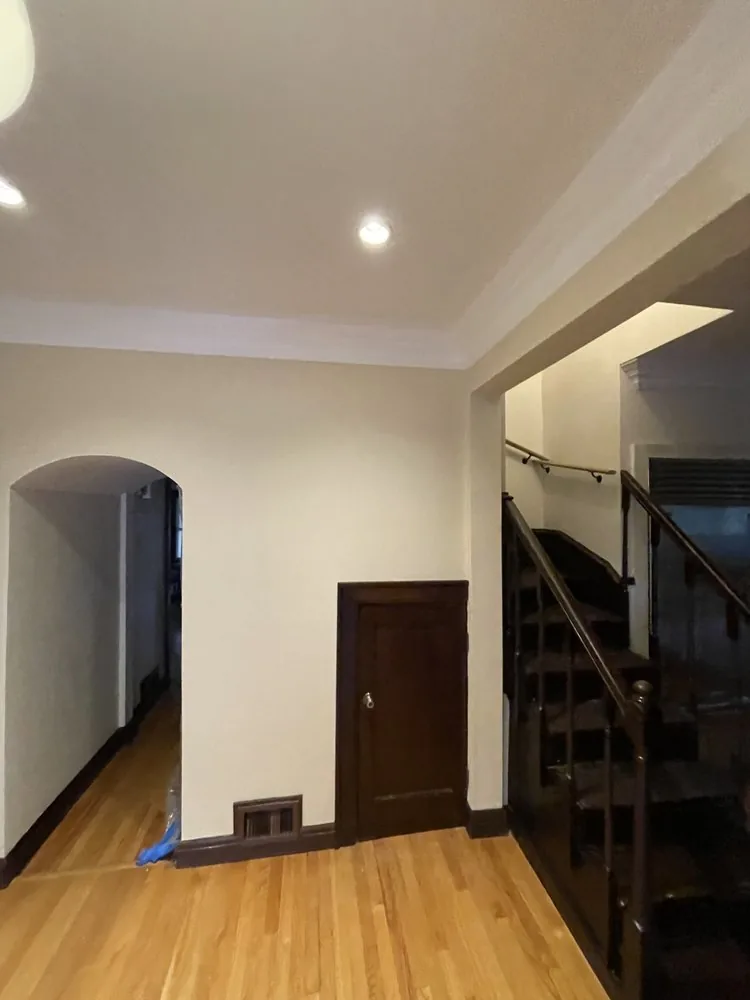
Reconstruction
The Gap Between Drying And Rebuilding Is Where Claims Go Wrong.
Most restoration companies are licensed to dry your house out and not to put it back. What happens in the weeks between is the part nobody quotes you, and it is expensive.
Free inspection on restoration work · Licensed C-10 & General B · Answered 24/7
What the handoff actually costs.
A mitigation-only company is not doing anything wrong by stopping. California licensing draws the line there. The problem is that the line lands in the middle of your project.
Four to eight weeks of nothing
Between the fans coming out and a builder starting, the property sits opened up. Every week of that is a week of ALE, a week of exposure, and a week your schedule slips.
Two estimates, two formats
The carrier now has to reconcile a mitigation invoice and a rebuild estimate written by companies that never spoke. Anything that falls between them becomes your problem to argue.
Nobody owns the middle
The wet insulation that was removed, the cabinet that was cut, the wiring that was disconnected. The mitigation crew is gone and the builder was not there. Undocumented work becomes disputed work.
You become the general contractor
Chasing two schedules, two sets of paperwork, and one adjuster, at the exact moment when you have the least capacity for it.
YKCA INC holds a C-10 electrical and a B general building license on the same number, so the drying, the electrical, and the rebuild sit on one contract with one schedule. Verify it yourself on the CSLB register, which is a habit worth having with any contractor.
How the rebuild runs.
The order is dictated by inspections and by what has to be visible when. Nothing gets closed up before it has been seen and before the readings allowed it.
- 01
Scope written while the walls are open
The rebuild estimate gets written by the people who did the demolition, with the photographs from the day it came out. That is what makes a supplement defensible later.
- 02
Permits pulled where required
Structural work, electrical, and anything that changes an assembly goes through your city or county. On unincorporated parcels that is the county, which has its own timeline. We handle the submittal.
- 03
Rough-in and inspection
Framing repairs, electrical, and anything else that has to be seen before it is covered. Our own C-10 crew does the electrical, so that inspection is not waiting on a subcontractor’s calendar.
- 04
Close, finish, and match
Insulation, drywall, texture to match the existing, paint, flooring, trim, cabinetry. Texture matching in older Bay Area homes is its own craft and it is where a cheap rebuild announces itself.
- 05
Final inspection and documentation
Sign-offs, the completed invoice, and the photo record the carrier needs to release recoverable depreciation. The paperwork is part of the job, not an afterthought.
The part that decides whether it looks repaired.
A rebuild is judged by the transitions. Where new drywall meets old, where new flooring meets the run that stayed, where fresh paint stops. A room that was rebuilt properly does not read as a repair from the doorway, and getting there is mostly about texture, sheen, and how far the work is feathered out rather than about materials.
Older Bay Area homes make this harder in specific ways. Hand-applied wall textures that no spray gun reproduces. Plaster that behaves nothing like drywall. Hardwood in widths and species that are no longer stocked. Original tile that has to be sourced from salvage or matched deliberately rather than approximately.
This is also where the insurance conversation about matching happens, and it is worth having with photographs and a position rather than accepting the first number. We will document what a genuine match requires so the discussion is about evidence.
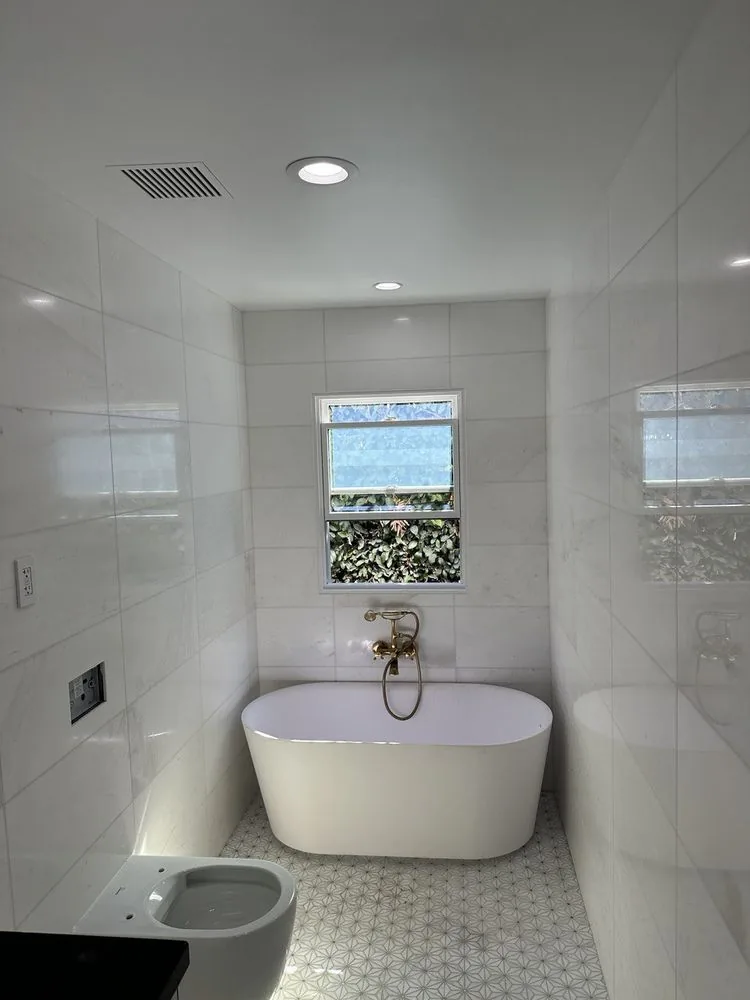
Stripped to studs to dry, then rebuilt: tile, tub, fixtures, and the electrical behind it.
Rebuild questions
Next on the same job.
24/7 Emergency Response
An undocumented cash repair forfeits the depreciation the carrier is still holding for you.
Licensed C-10 & General B · CSLB #1158693 · Bonded & Insured